
A Chicago engineer got his office ready to welcome three friends. He checked the heating, waited by the door and greeted them one by one. On the night of 23 February 1905, without knowing it, Gustavus Loehr invented the role of Sergeant at Arms.
A role with more history than it seems
The Sergeant at Arms was not born in Rotary. It goes back much further. In the Middle Ages, the Sergeant at Arms was the soldier who accompanied the king into battle, responsible for keeping order and protecting the sovereign. The mace he carried — heavy, iron-headed — was both a weapon and a symbol of authority.
In time, war gave way to politics. The office survived, reinvented as the guardian of parliamentary order. Today the Sergeant at Arms is an official position in the parliaments of the United Kingdom, the United States, Canada and South Africa. The same idea, adapted to times when authority is exercised through protocol rather than iron.


In Rotary, that legacy was adapted to the spirit of the club. The Rotary Sergeant at Arms exercises authority with courtesy, never by imposition. The order achieved does not come from rank but from respect that has to be earned. Yet the concept is the same: someone who makes sure everything works, that the atmosphere is right and that no one is left unattended.
Sergeant at Arms or “macero”? One role, two names
Here is one of those facts that surprises veterans and newcomers alike. The official Rotary International term is Sergeant at Arms. That is how it appears in every RI document and how it is known in English-speaking clubs. In the Spanish-speaking world, however, a name of its own was adopted: MaCeRo.
The acronym is no accident: MAestro de CEremonia ROtario, Rotary master of ceremonies. Curiously, the word came first — as a phonetic adaptation of the English term — and the acronym was built afterwards to give it meaning in Spanish. The reverse of the usual path, but a perfect fit.
Chicago, 1905: the origin

Four men. One office. One idea. On the cold night of 23 February 1905, Paul P. Harris, Gustavus Loehr, Silvester Schiele and Hiram Shorey met without realising they were founding one of the largest service organisations in the world. Loehr was the host. He prepared the room, waited at the door and made sure everything was ready.

«Gus, the host, reminded each of the guests in advance of the place, date and time of the meeting. Fifteen minutes before the appointed hour, Gus had everything ready. He waited at the door and, as they arrived, warmly welcomed every guest.»
What Gus Loehr did that night — arriving first, preparing, welcoming, introducing, closing the evening — is exactly what a Sergeant at Arms does today. The difference is that it now has a name and a blue and gold sash to go with it.
The shillelagh: a symbol with humour


In 1921, at the International Convention in Belfast, the city's Rotary club had an idea that mixed protocol with a sense of humour: to present Rotary International with a shillelagh — the traditional Irish stick carved from blackthorn — as a symbol of the Sergeant at Arms' authority to keep order. Not a weapon, of course. A wink full of Irish identity.
For decades Sergeants at Arms carried it at conventions with genuine pride. In Honolulu in 1969 they raised it before the cameras. In New Orleans in 2011 the sash read "Rotary Guide". Today the shillelagh is more legend than practice. But the principle it stood for — keeping order without losing the smile — remains the essence of the role.
What the Sergeant at Arms actually does

The Sergeant at Arms must arrive before anyone else and leave after everyone. He prepares the room before each meeting — checking that sound, projection and temperature work, agreeing the menu and table layout with the restaurant — and stays behind to clear up.
When there are guests, he welcomes them and introduces them to the club in order of protocol: civic authorities first, Rotarians next, visitors last. Where appropriate, he publicly marks birthdays and anniversaries — the small touches that are missed when they are absent. During the session he keeps to time and, when there is a speaker, introduces them with full name, position and the title of the talk. At the close, where appropriate, he hands the president the gift for the speaker and invites them to sign the club's book of honour.
Not every meeting has a speaker or special guests. Some are pure internal debate, sharing and fellowship. In those the Sergeant at Arms is still there — coordinating, attending, making sure nobody is left out.
The Sergeant at Arms in Alicante Lucentum Puerto

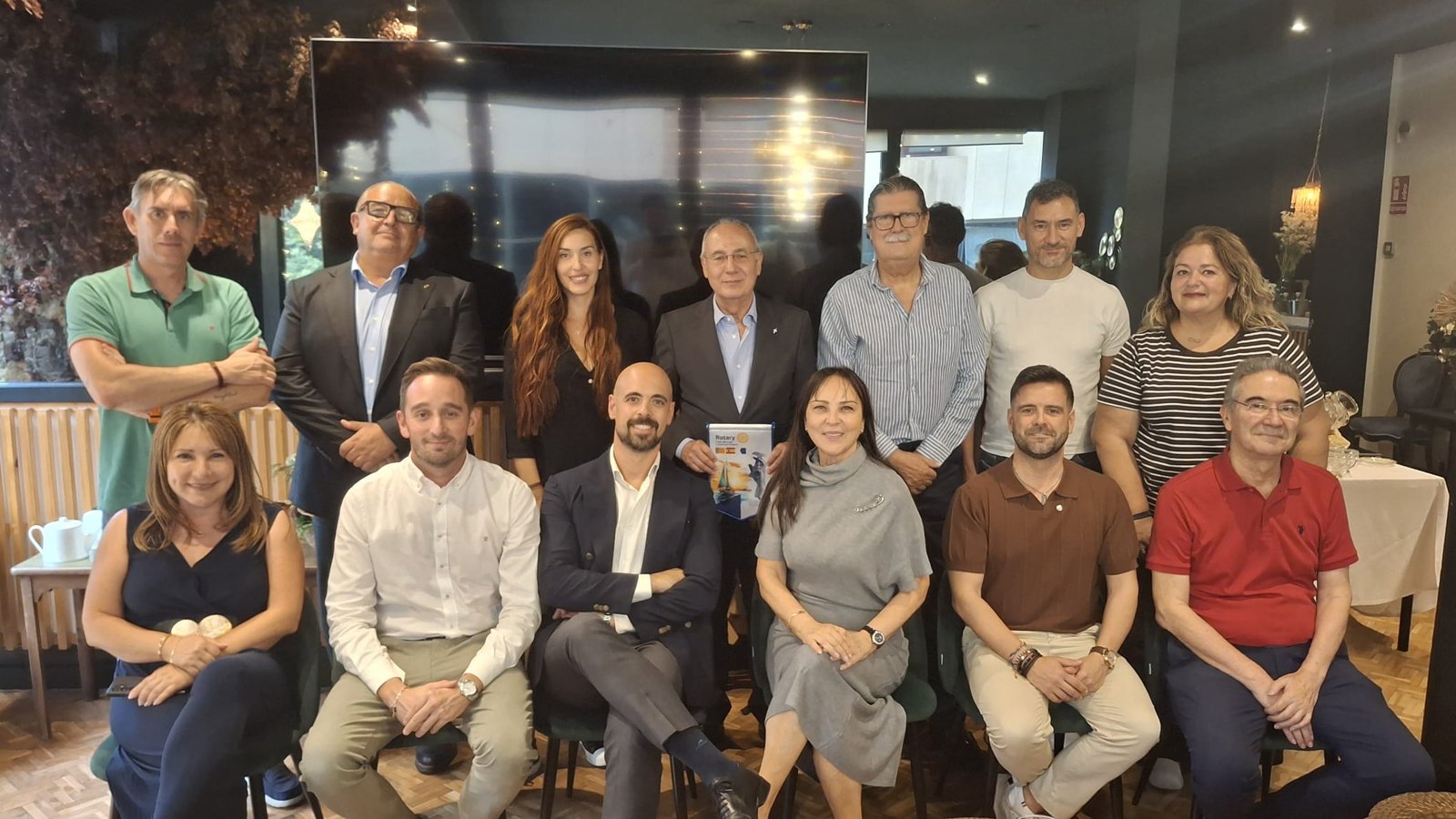
We meet on Tuesdays at 2.30 pm at the Teselas restaurant in the Real Liceo Casino de Alicante. Weekly meetings, with speakers, with debate, with members of many years and others who have just joined. The Sergeant at Arms has to be there before anyone else, and leave after everyone.
For this 2026–27 term I serve as the club's Sergeant at Arms. My main wish is that nobody leaves one of our meetings without having felt welcome.
«The best Sergeant at Arms is the one you do not notice. He works so that others shine.»
Tags
- sergeant at arms
- protocol
- Rotary history
About the author
Juan Carlos Brotons
Sergeant at Arms, Rotary Club Alicante Lucentum Puerto, 2026–27 term